ENVIRONMENT
At Bondalti, our commitment to the environment is an absolute priority. We have implemented emerging technologies to reduce our carbon footprint and improve water and waste management, and we are committed to decarbonizing our processes and making them circular.
Responsible water and waste management is essential to us, and we develop innovative projects to ensure the sustainability of our operations. In addition, we actively engage with the community to address issues such as air pollution and emissions, reinforcing our corporate responsibility and our commitment to a more sustainable future.
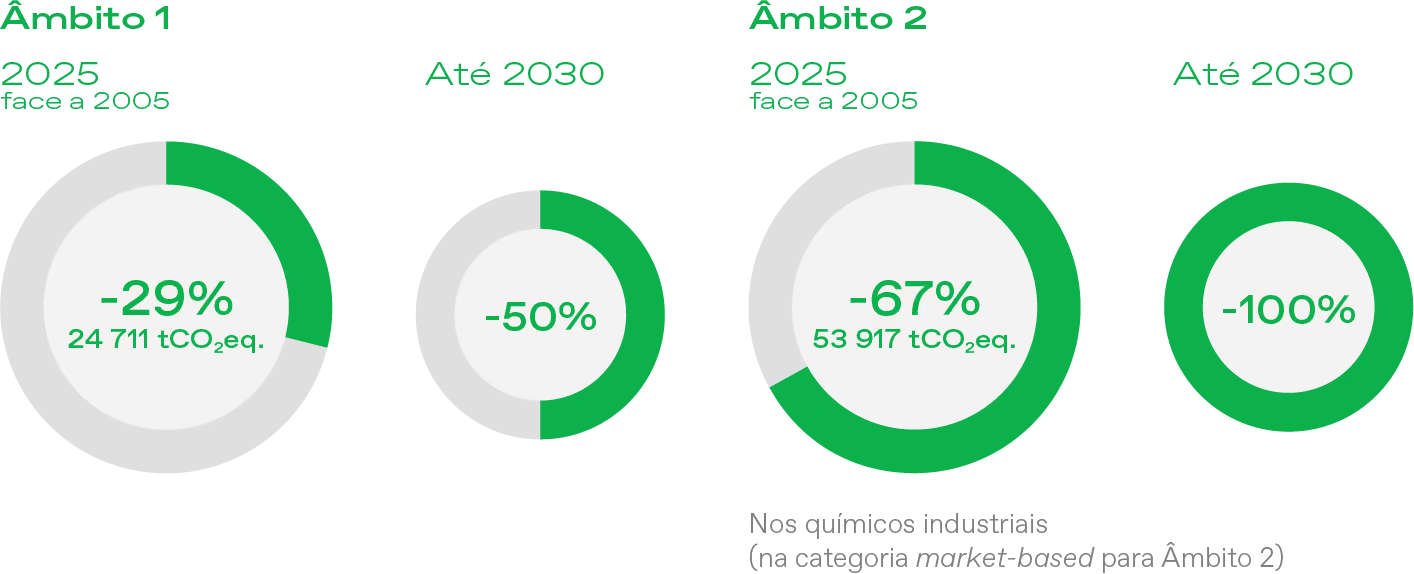
reduction in Scope 1 and 2 emissions compared to 2005*
specific water consumption, compared to the previous year*
electricity from 100% renewable sources*
* in Industrial Chemicals
Climate Transition Strategy
As a leading business group, Bondalti is committed to spearheading initiatives that promote environmental sustainability and climate change mitigation, aligning its operations with global goals for the climate transition. In line with the decarbonization initiatives implemented both in its operations and throughout the value chain, Bondalti considers climate action a fundamental element of its business model, encompassing all areas of the organization.
Bondalti Chemicals is developing its transition plan to mitigate climate change, with the goal of reducing greenhouse gas emissions and contributing to the transition to a low-carbon economy. This plan includes the establishment of climate targets and a set of measures aimed at reducing greenhouse gas emissions from its operations.
At Bondalti Water, the climate change mitigation transition plan has been taking shape through concrete operational measures aimed at reducing CO2 emissions associated with its activity and at continuously improving the calculation of its carbon footprint.
In 2025, the company strengthened its commitment to sustainable mobility by acquiring 100% electric vehicles, along with an increase in the number of charging stations and the provision of vehicle charging cards, facilitating the adoption of lower-carbon transportation solutions. It also continued to evaluate geothermal and on-site electricity generation solutions, as well as the maintenance and cleaning of solar panels at its operations in Spain, contributing to the efficiency and reliability of existing infrastructure.
Carbon Footprint
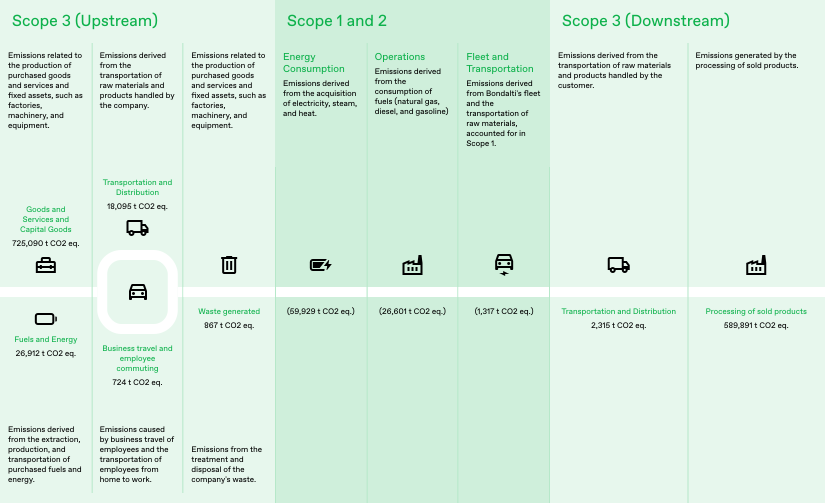
Bondalti’s gross greenhouse gas (GHG) emissions contribute directly to climate change, as they result from energy use and processes associated with industrial activity and the value chain.
Given the company’s relative size, the nature of its business, and the geographic context in which it operates, this contribution should be viewed as relatively limited when considered in the context of the country’s and the sector’s total emissions. Nevertheless, Bondalti recognizes the significance of its emissions in terms of their environmental and climate impact and remains committed to monitoring, reporting, and progressively reducing them.
The Energy of Tomorrow
By 2030, Bondalti Chemicals aims to ensure that 100% of its electricity consumption comes from renewable energy sources, through a strategy based on self-consumption and the signing of Power Purchase Agreements (PPAs), which offer greater price stability and predictability. Currently, approximately 39% of the company’s electricity consumption is already sourced from certified renewable sources, backed by guarantees of origin.
Electricity from renewable sources
39%
2012
100%
2025
by 2030
Water: Management and Sustainability
To manage the environmental and social impacts of water use in an industrial context, Bondalti has prioritized reducing specific water consumption (consumption per metric ton of product).
Water Reuse
+24%
2012
+30%
2025
by 2030
Specific water consumption
-23%
2012
-43%
2025
by 2030

Biodiversity
Bondalti is firmly committed to sustainability and environmental protection, incorporating biodiversity as an essential element of its Together Matters program, particularly within the +Nature pillar.
Projects and Initiatives
Restoration and Conservation of Natural Habitats
Among the projects that illustrate our commitment to biodiversity, the program to restore natural habitats in areas adjacent to our facilities stands out. This program aims to restore degraded ecosystems, promote native flora and fauna, and ensure the continuity of essential ecological cycles.
Species Monitoring
Another example is the flagship species monitoring project, in which we collaborate with local and scientific organizations to identify, protect, and study endangered species. This project focuses on raising awareness about the importance of biological diversity and on developing nature-based solutions.
Ambitions and Goals
Bondalti aims to consolidate its position as an active player in the promotion of biodiversity. Our goals include:
Increase biodiversity values in two regions in Portugal and two regions in Spain by 2030, ensuring the preservation of species and the resilience of ecosystems.
Implement innovative nature-based solutions to mitigate the impact of industrial activities.
Promote strategic partnerships with local research institutions and NGOs, strengthening scientific knowledge and community awareness of biodiversity.
Waste and the Circular Economy
As part of its industrial operations, Bondalti generates waste, including hazardous waste, while simultaneously playing an active role in promoting the circular economy by reducing resource consumption, recovering waste, and developing innovative solutions that drive more sustainable and efficient business models throughout the value chain.
Non-hazardous industrial waste recovered
99%
Year n-1
100%
2025
by 2030
Hazardous industrial waste incinerated
-93%
Year n-1
-80%
2025
by 2030