Sustainability
At Bondalti, we view sustainability as a cross-cutting commitment that guides how we create value and make decisions. We seek to balance economic growth, social responsibility, and environmental preservation, ensuring that our development contributes to a positive and lasting impact.
Our operations are based on the responsible use of resources, the promotion of circularity, the protection of ecosystems, and the empowerment of people throughout the entire value chain. We work to strengthen relationships built on trust with employees, partners, customers, and communities by promoting ethical, inclusive, and responsible practices.
Through innovation and continuous improvement, we develop solutions that increase the efficiency of our operations, reduce our environmental impact, and strengthen the resilience of our business. We believe that sustainability is not just a goal, but a way to build a more balanced future, where progress generates benefits for people, society, and the planet.
points in the EcoVadis assessment
in the CDP assessment in the Climate Change and Water Security categories
validated Bondalti Chemicals’ climate targets
An integrated vision
Where applicable, the reported indicators follow internationally recognized methodologies, including frameworks such as the Greenhouse Gas Protocol (GHG) for calculating greenhouse gas emissions. In addition, Bondalti adheres to the Global Reporting Initiative (GRI) standards, using them as a complementary framework to ensure the consistency, comparability, and transparency of the information disclosed.
As a signatory to the United Nations Global Compact, Bondalti reaffirms its commitment to the ten principles in the areas of human rights, labour practices, the environment, and anti-corruption. The information presented in this report contributes to the annual communication on progress regarding the implementation of these principles.
Bondalti has identified the United Nations Sustainable Development Goals (SDGs) to which it believes it can contribute most significantly, whether through its direct operations or throughout the value chain.
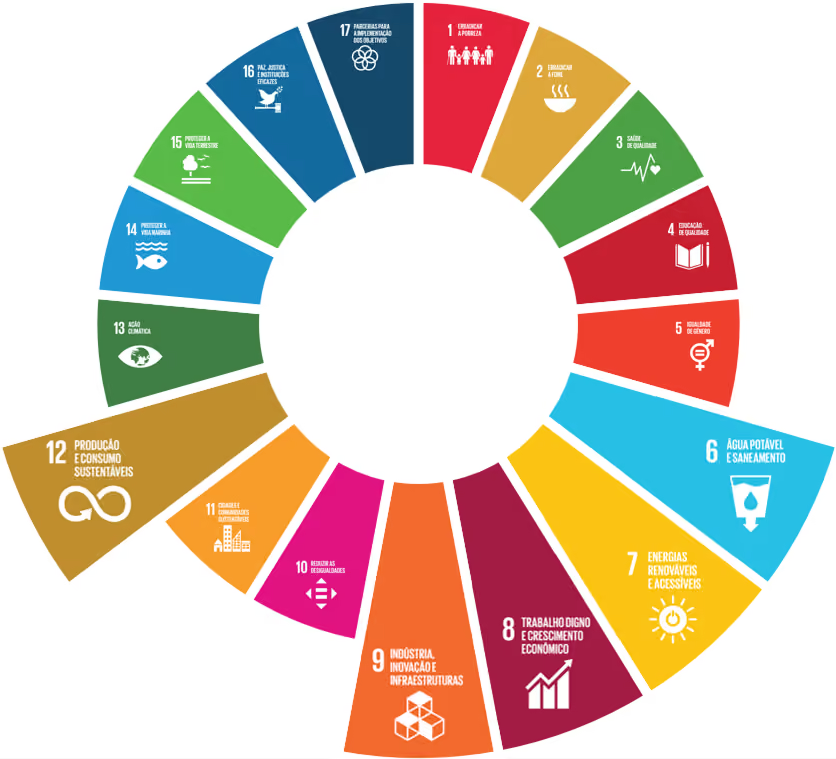
SDG 6
Bondalti is committed to measures aimed at water efficiency and effluent discharge. Some of Bondalti’s products are essential for water treatment processes.
SDG 7
Bondalti is implementing various energy efficiency measures and is committed to continuously monitoring its emissions. Bondalti aims to increase the share of renewable energy in its overall energy mix.
SDG 8
Bondalti is focused on the sustainable development and expansion of its business, prioritizing operational efficiency and human capital.
SDG 9
Bondalti is a significant company in the national industrial landscape, investing in RDI activities aimed at improving operational efficiency and advancing technological and functional modernization.
SDG 12
Bondalti invests in circular economy initiatives to promote responsible and more competitive economic growth with a reduced impact on social and natural capital.
Our approach
Bondalti continuously monitors developments in the European framework for sustainability reporting, specifically the Corporate Sustainability Reporting Directive (CSRD) and the European Sustainability Reporting Standards (ESRS), adopted by the European Commission.
Bondalti has identified the United Nations Sustainable Development Goals (SDGs) to which it believes it can contribute most significantly, either through its direct operations or throughout the value chain. As a signatory to the United Nations Global Compact, Bondalti reaffirms its commitment to the ten principles in the areas of human rights, labour practices, the environment, and anti-corruption. The information presented in this report contributes to the annual communication on progress regarding the implementation of these principles.
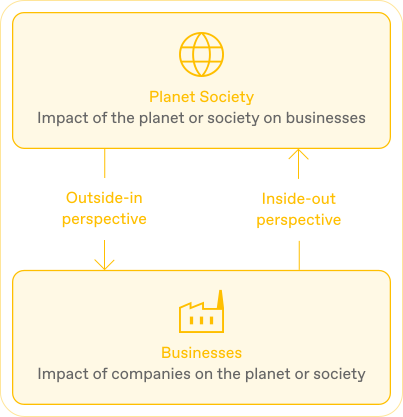
Double Materiality Methodology
In 2025, Bondalti conducted a new Double Materiality Analysis to review and strengthen the previous exercise and ensure full alignment with the requirements of the Corporate Sustainability Reporting Directive (CSRD) and the European Sustainability Reporting Standards (ESRS).
Climate change and GHG emissions management
Climate management focuses on reducing GHG emissions in the company’s own operations—which are energy-intensive—and throughout the value chain. At the same time, there is potential for a positive impact through the development and use of green hydrogen, contributing to the decarbonization of industrial sectors.
Energy management
It addresses the efficiency and source of the energy used in operations, with a focus on reducing consumption and losses. Bondalti also plays a key role in supporting the stability of the national gas and electricity services, thereby strengthening the resilience of the energy system.
Water resources management
It involves water-intensive production processes, mitigated by efficient water use and proper effluent treatment. It takes into account the location of operations, with more severe impacts in areas experiencing water scarcity. There is also potential for a positive impact through water treatment products that reduce water pollution in the value chain.
Circularity and waste management
The focus is on the prevention, reduction, and recovery of waste—including hazardous waste—throughout its life cycle. Key initiatives include circularity initiatives involving partnerships within the value chain and the energy recovery of waste, thereby reducing resource consumption and the associated environmental footprint.
Occupational health and safety
It covers accident prevention, occupational risk management, and workplace health promotion. The priority is to reduce accidents and health problems among employees in operational settings where they are exposed to specific hazards (toxic materials).
Workforce management and development
It includes ongoing training and skills development to support operational excellence and technological transition. It also addresses the mitigation of impacts on work-life balance, such as those associated with shift work.
Inclusive development and Meritocracy
It aims to promote equal opportunities, representation, and an inclusive corporate culture. The focus is on reducing disparities (e.g., gender underrepresentation in top management, potential risk of a gender pay gap) and ensuring merit-based advancement.
Relationship with the community
It covers social investment (education, science, inclusion), as well as the creation of direct and indirect jobs. At the same time, efforts are made to minimize impacts on quality of life (e.g., air emissions, odours, noise, and visual impact) and to prevent industrial incidents that could potentially affect the community.
Supplier chain management
This topic covers decent working conditions, safety, and respect for human rights in high-risk regions and sectors, incorporating environmental and social due diligence into critical raw materials and services.
Product quality and safety
It focuses on the compliance and safety of chemicals throughout their life cycle, preventing risks to users’ health and safety. It involves technical controls, providing appropriate information, and continuous improvement.
Innovation
It focuses on investment in new technologies and R&D that increase efficiency and reduce environmental impacts. It also drives the upskilling of employees and partners, promoting the responsible adoption of emerging solutions.
Cybersecurity
It aims to protect personal data and sensitive information by preventing cybersecurity incidents and system failures. The focus is on technological resilience, access management, and incident response.
Business ethics and conduct
It promotes integrity, the prevention of corruption and bribery, and transparency. It also includes responsible advocacy that is aligned with industrial competitiveness and the sustainable transition within the European regulatory framework.
Together Matters – Social investment model
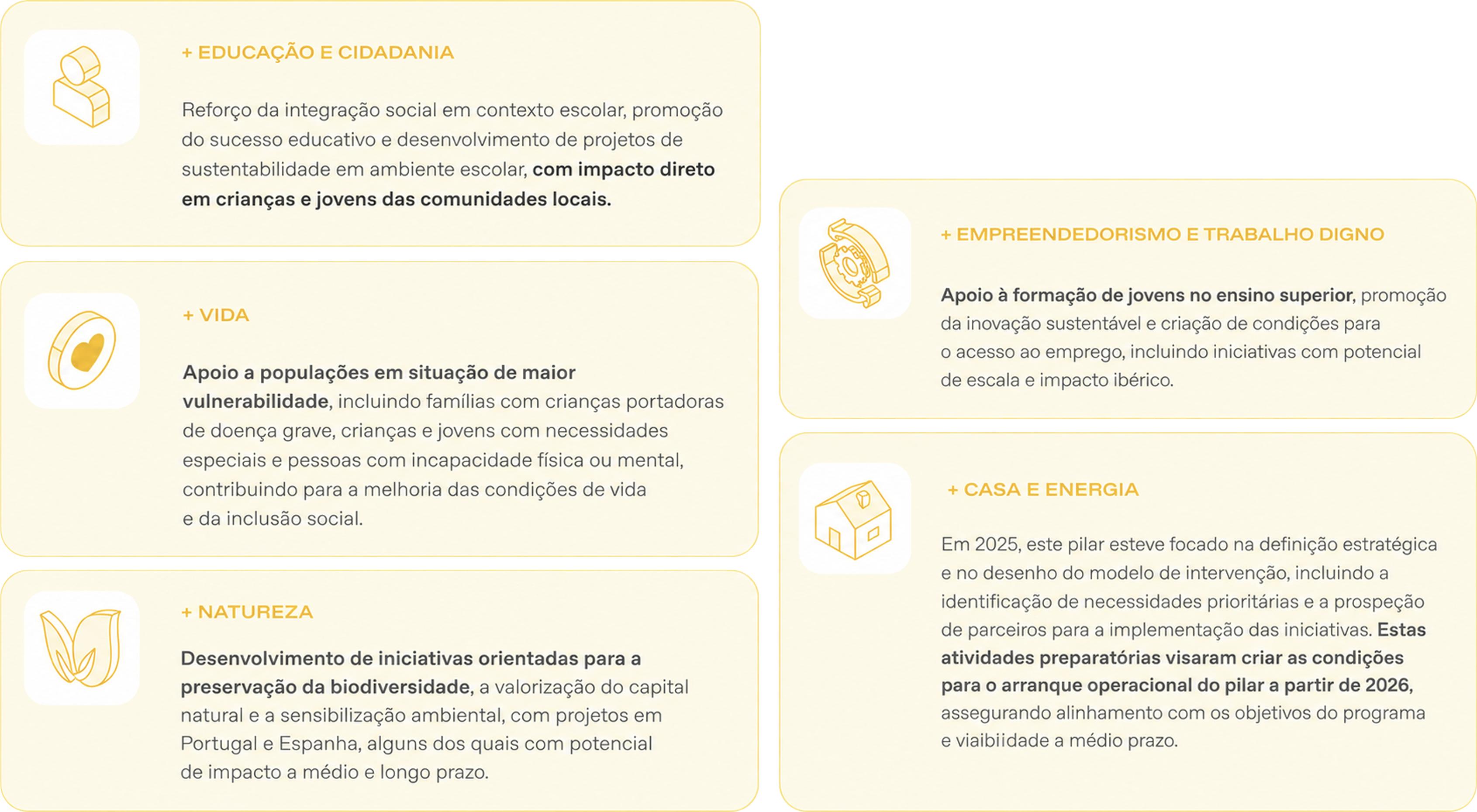
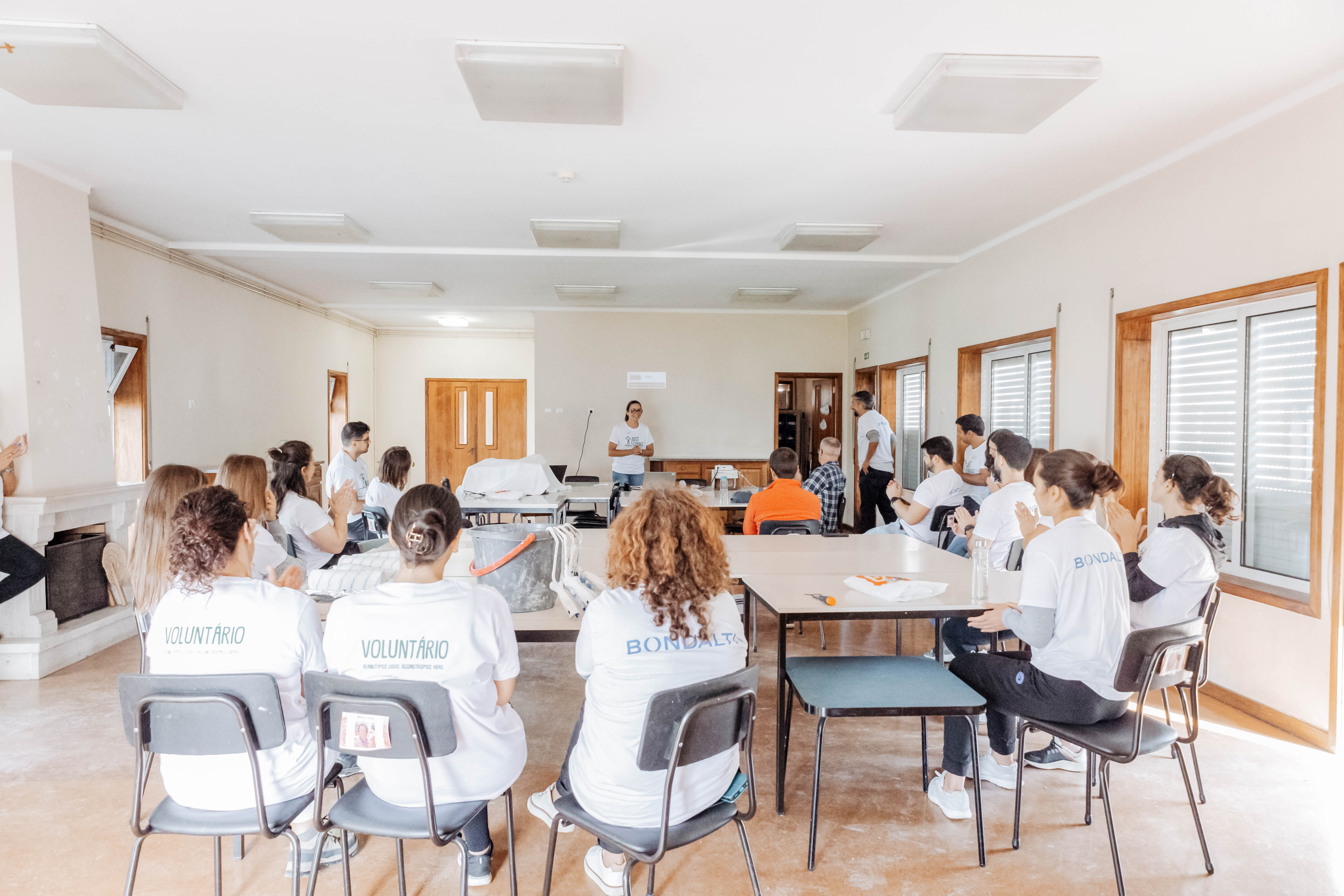
In 2025, Bondalti continued to develop the Together Matters programme, reinforcing its role as the cornerstone of the Company’s engagement with affected communities and its social investment.
The programme has remained a key tool for turning dialogue with communities into concrete actions that have a positive impact, in line with the needs identified in the regions where Bondalti operates.
Bondalti Corporate Responsibility – The Together Matters Programme
Throughout the year, Together Matters has evolved toward an increasingly structured and consistent approach, based on close partnerships with local institutions, regular monitoring of the projects it supports, and the integration of community perspectives into the design of its initiatives.
This progress reflects Bondalti’s commitment to creating sustainable social value and strengthening its social licence to operate. Approximately 15 projects were developed, spread across the programme’s five strategic pillars, ensuring an integrated approach to the social, environmental, and economic dimensions of sustainable development.
The selection and monitoring of these initiatives were based on a structured governance model, ensuring alignment with the 2030 Goals of Bondalti’s Corporate Responsibility Strategy and consistency with the priorities identified in the communities where the Company operates.
What is the Together Matters programme?